We haven't just improved existing methods, we've moved beyond the GWAS paradigm entirely. While the field debates common versus rare variants, we've discovered that the most valuable information is hidden in what everyone discards.
Our patent-pending computational platform extracts molecular-based subtypes from data that traditional approaches systematically discard, enabling precision medicine for any complex disease, from existing datasets, at scale.
Most complex diseases are not the same at the molecular level. What looks like one condition is actually several distinct subtypes, each requiring different approaches to treatment.
Standard genetic analysis focuses on variants that pass strict quality control filters and discard genomic signals containing critical biological information. SNP array probe intensity anomalies are filtered out as technical artifacts. Copy number gains are dismissed as noise. Non-Mendelian inheritance patterns are excluded as errors.
Our breakthrough is recognizing that these "artifacts" actually harbor rich subtype-defining information. Our patent-pending methods extract rare variant signals and structural variations from widely available SNP arrays and achieve what is often missed by next-generation sequencing. By integrating family-based inheritance patterns with advanced pathway analysis, we reveal molecular subtypes invisible to both GWAS and traditional rare variant approaches.
Analyze trio and family genomic data to capture inheritance patterns that standard case-only analyses miss
Apply proprietary algorithms to extract subtype-defining signals from genomic patterns typically filtered out as noise
Map extracted signals to biological pathways and molecular mechanisms using systems-level analysis
Identify molecularly distinct subtypes with high statistical confidence and clinical relevance
We've fundamentally rethought how to extract biological meaning from genetic data.
We chose autism as our first application because it represents one of the most challenging conditions in medicine: highly heritable yet extremely heterogeneous, with no reliable biomarkers and limited treatment options. If our platform works for autism, it will work for anything.
Autism spectrum disorder encompasses the full complexity of human genetic architecture:
Successfully stratifying autism demonstrates that our approach can handle the most complex genetic architectures in human disease.
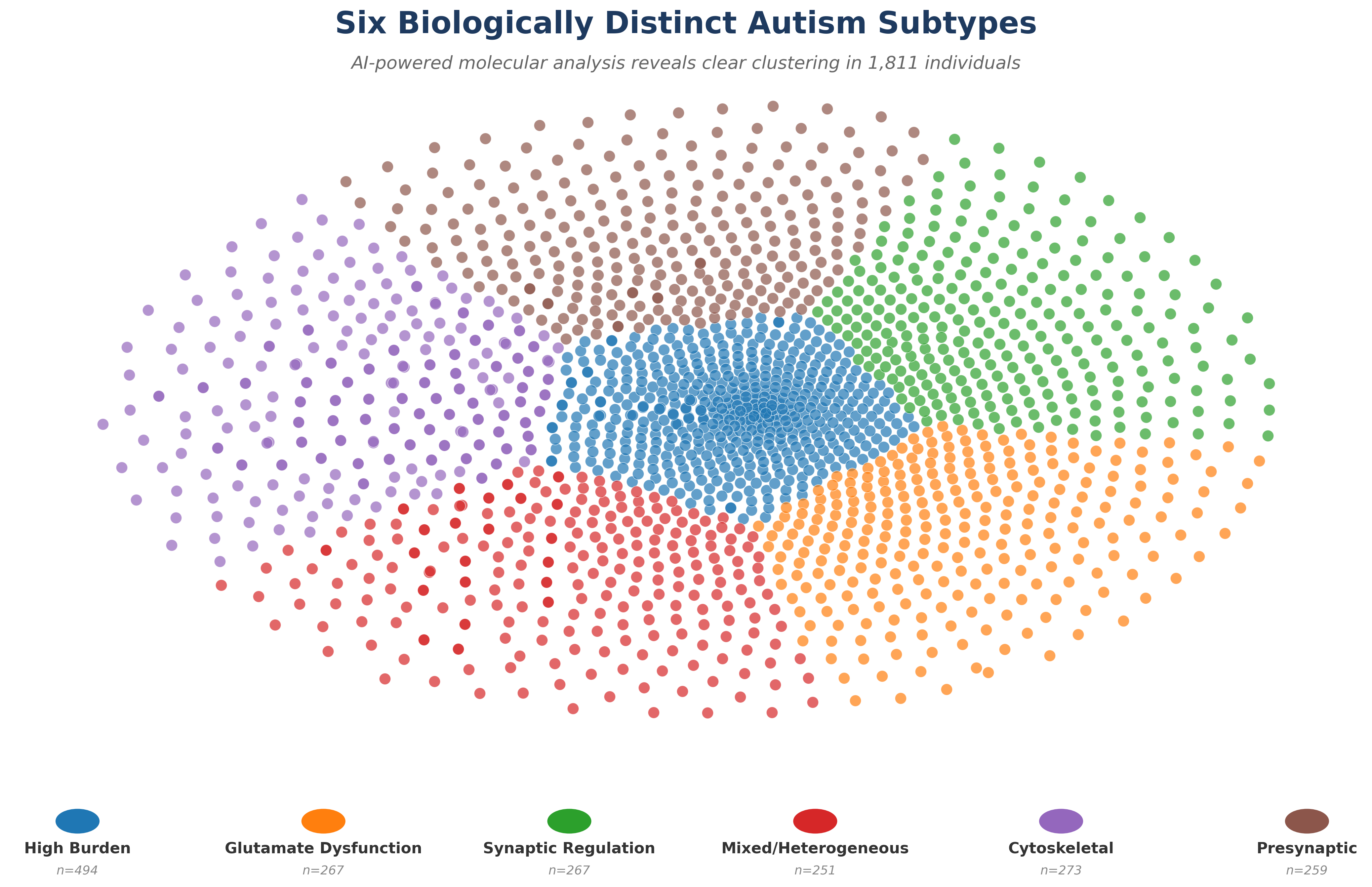
AI-powered molecular analysis reveals six biologically distinct autism subtypes with different underlying mechanisms
Each subtype has distinct biological mechanisms, clinical characteristics, and therapeutic implications.
Key Features:
Therapeutic Implications: Requires comprehensive, multi-system approach rather than single-pathway intervention
Key Features:
Therapeutic Implications: Harbors variants in glutamate receptors and ion channels with FDA-approved therapies for other conditions, making this subtype an immediate repurposing candidate
Key Features:
Therapeutic Implications: FDA-approved drug targets include cholesterol receptors, GABA-B receptors, and neurotrophin pathways. Pharmacogenetic considerations for medication dosing. Anti-inflammatory strategies may be particularly relevant
Key Features:
Therapeutic Implications: Potentially responsive to cholesterol-modulating drugs
Key Features:
Therapeutic Implications: Early motor interventions; occupational and physical therapy focused on motor development
Key Features:
Therapeutic Implications: Strong candidate for SSRI response. May respond to dietary tryptophan modulation.
Our analysis identified 8 major biological pathways disrupted across the autism subtypes—demonstrating the platform's ability to map genetic variants to functional mechanisms.
Neurotransmission, vesicle recycling, and synaptic plasticity mechanisms
Excitability regulation, E/I balance, and action potential generation
Cell-cell contacts, dendritic spine formation, and synapse stability
Microtubule organization, axon guidance, and neuronal polarity
Intracellular transport, endosomal sorting, and membrane dynamics
Synaptic pruning, maternal immune activation, and inflammatory responses
DNA methylation, RNA modification, and chromatin remodeling
mRNA degradation, translation control, and post-transcriptional regulation
Our platform identifies molecular subtypes in any genetically complex condition—including diseases traditionally considered "simple" Mendelian disorders. Even single-gene diseases show unexpected molecular diversity.
Hereditary hemochromatosis and Niemann-Pick disease are classified as single-gene disorders, yet clinical presentation varies dramatically. Our analysis reveals why: molecular subtypes driven by modifier genes and regulatory variants that standard approaches miss.
Iron Overload Disorder
Patients with identical HFE C282Y/C282Y genotypes show 100-fold variation in outcomes:
Complete Missing Heritability Explained in this Family
Traditional genetic testing identifies these, but they don't predict severity
Metal transcription factor that regulates HAMP in response to zinc
Zinc transporter; cryptic deletion detected only via NMI
Iron + zinc dysregulation → severe phenotype
Iron-Zinc Pathway Interaction
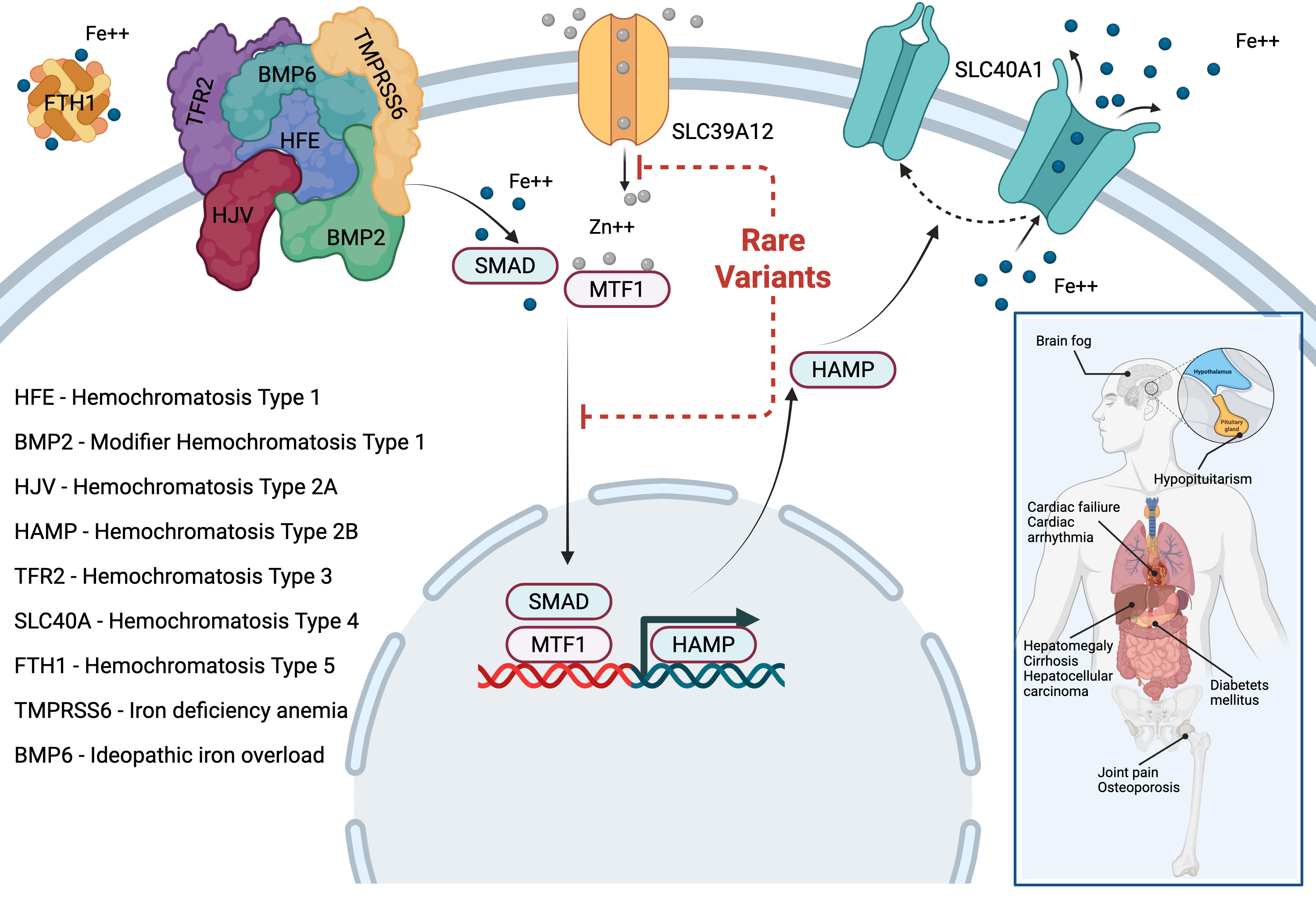
Complete iron-zinc regulatory pathway showing multiple hemochromatosis types. HFE (Type 1) requires modifier genes for severe phenotype. Rare variants in SLC39A12 (zinc transporter) and MTF1 (zinc-responsive transcription factor) regulate HAMP expression, creating epistatic interaction with HFE mutations. Other hemochromatosis genes shown: HJV (Type 2A), HAMP (Type 2B), TFR2 (Type 3), SLC40A (Type 4), FTH1 (Type 5), plus iron metabolism modifiers (TMPRSS6, BMP2, BMP6).
Severe Progressive Neurodegenerative Ataxia
Niemann-Pick has been misclassified as a cholesterol disease for decades:
NPC1 Mutation + Ferroptosis Pathway Modifiers in this Family
Traditional focus: cholesterol accumulation, but triggers iron overload
COX10, ALOX5, PSMB8, GCLC modulate lipid peroxidation sensitivity
Protective variants slow progression; target for FDA-approved drugs
SLC7A11, SLC3A2 (System xc-) import cysteine for GSH synthesis
From Cholesterol Storage to Ferroptosis
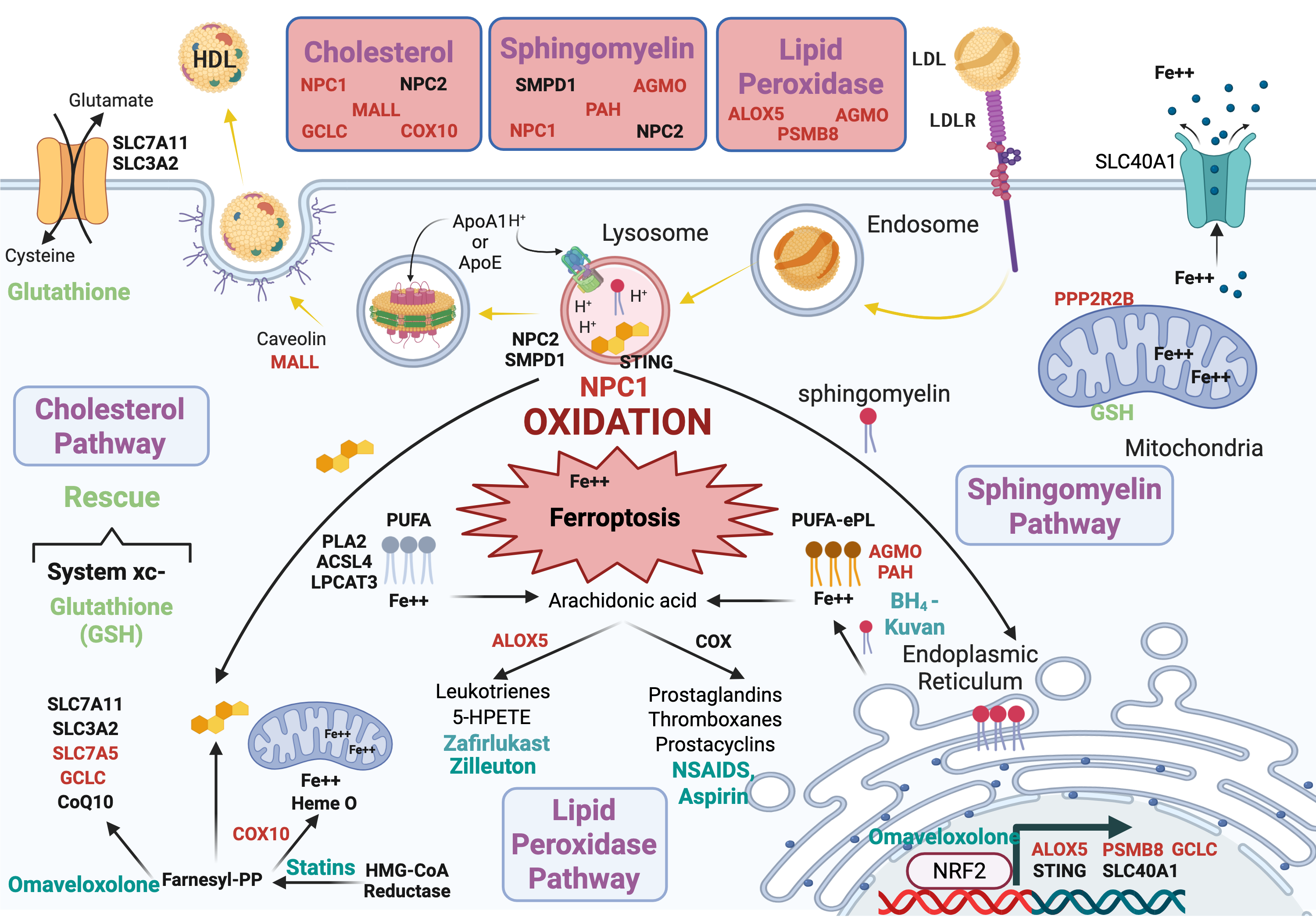
NPC1 oxidation triggers iron accumulation → lipid peroxidation → ferroptotic cell death. Modifier genes (highlighted in colored boxes) affect cholesterol pathway (NPC1, NPC2, MALL, COX10, GCLC), sphingomyelin pathway (SMPD1, AGMO, PAH, NPC2), and lipid peroxidase pathway (ALOX5, AGMO, PSMB8). NRF2 activation by omaveloxolone targets multiple pathway components including ALOX5, PSMB8, GCLC, STING, and SLC40A1.
Even "single-gene" diseases are molecularly heterogeneous. Standard genetic testing tells patients "You have the mutation" but can't predict severity or treatment response. Our platform reveals the modifier landscape that determines clinical outcomes—enabling true precision medicine even for rare diseases.
Identifies the primary mutation (HFE, NPC1) but ignores modifier variants that determine severity
Generates millions of variants but lacks framework to identify which modifiers matter
Extracts subtype-defining signals from family data and integrates regulatory variants to reveal functional subtypes
Our platform applies to any genetically complex rare disease:
📊 Clinical Trial Stratification
Enrich for drug-responsive molecular subtypes
🎯 Prognostic Precision
Predict disease severity at diagnosis
💊 Treatment Selection
Match patients to optimal therapies
🧬 Drug Development
Identify novel therapeutic targets per subtype
Our molecular subtyping platform enables precision medicine across diverse therapeutic areas and stakeholders.
Enhanced Test Reports
Clinical Decision Support
Patient Stratification
Discovery Platform
Our autism analysis proves the power of mining genomic signals that others discard. The same proprietary methods apply to any complex condition with genetic contributions.
Potential applications include: psychiatric disorders (schizophrenia, bipolar disorder, ADHD), neurodevelopmental conditions (intellectual disability, epilepsy), cancer molecular subtypes, cardiovascular disease stratification, autoimmune conditions, rare disease characterization, pharmacogenomic response prediction, and complex trait architecture. Our platform scales from focused cohorts to biobank-level datasets.
We're seeking strategic partners to scale our molecular subtyping platform across therapeutic areas and bring precision medicine to patients worldwide.
Contact us to discuss how our platform can transform diagnostics and treatment in your therapeutic area.
Get In TouchDr. Garvin is a molecular geneticist with over 20 years of experience in precision medicine and computational biology. He holds a Ph.D. from the University of Alaska Fairbanks and a Certificate in Personalized & Genomic Medicine from the University of Colorado Denver. His career spans Oak Ridge National Laboratory, Oregon State University, and biotechnology companies including Tularik (Amgen) and CV Therapeutics (Gilead).
His research focuses on identifying the genetic basis of complex diseases through novel computational approaches. With over 37 peer-reviewed publications in journals including Genome Biology, eLife, and PLoS Genetics, and over $5 million in NIH and DOE funding, Dr. Garvin has established himself as a leader in precision medicine research.
His COVID-19 research became the 2nd most viewed article in eLife history with over 154,000 views. Dr. Garvin founded Williwaw Biosciences after discovering that family-based genomic data contains rich subtyping information systematically discarded by conventional analysis pipelines—a breakthrough that enables precision medicine across any complex disease.
Ben Garvin brings extensive experience in technology commercialization and strategic partnerships, with a proven track record of successfully selling advanced algorithms and technology solutions to large enterprises in the internet advertising space.
As Chief Business Officer, Ben leads business development, strategic partnerships, and commercialization efforts, translating Williwaw's scientific innovations into market-ready solutions for the precision medicine industry.
Interested in applying our platform to your therapeutic area or exploring partnership opportunities?
For clinical partnerships, licensing inquiries, or investment opportunities, please reach out directly.